Skip to content


After surgery, even getting from the medical facility to your front door can require more planning than expected. Driving restrictions, limited mobility, and discomfort can make an ordinary ride home less practical. Door-to-door post surgery transportation provides a scheduled option that accounts for these needs during the transition home.
Can I drive myself home after surgery?
Driving may be restricted after anesthesia, sedation, certain medications, or procedures, so patients should follow the discharge instructions given by their medical team.
Why the Trip Home Deserves Some Planning
Surgery can temporarily change how a person handles activities that are normally routine. Walking across a parking lot, stepping into a vehicle, fastening a seat belt, or getting from the curb to the front door may require more time and care.
Sedation and anesthesia can add another consideration. A patient may feel awake at discharge but still be under instructions not to drive for a certain period. Pain medication, fatigue, restricted movement, and instructions to protect the surgical area can also affect the trip.
Planning transportation before the procedure helps account for these factors. It gives the patient, surgical facility, and transportation provider an opportunity to understand the pickup arrangement and any mobility considerations before discharge.
7 Benefits of Door-to-Door Post-Surgery Transportation
1. A Planned Alternative When Driving Is Restricted
One of the most immediate concerns after many procedures is that the patient cannot simply drive home. Medical instructions may prohibit driving after anesthesia, sedation, or medications that can affect coordination and alertness.
Having transportation scheduled beforehand provides a clear alternative. Patients can follow their discharge restrictions without having to work out a ride after the procedure is complete.
2. Less Walking Between the Facility and Vehicle
A standard transportation arrangement may still involve walking through a parking lot or reaching a vehicle waiting away from the facility entrance. That distance can be inconvenient for someone dealing with soreness, weakness, or temporary movement restrictions.
Door-to-door arrangements can limit unnecessary walking by coordinating pickup closer to the appropriate entrance and bringing the patient to the requested destination.
3. Transportation That Accounts for Mobility Equipment
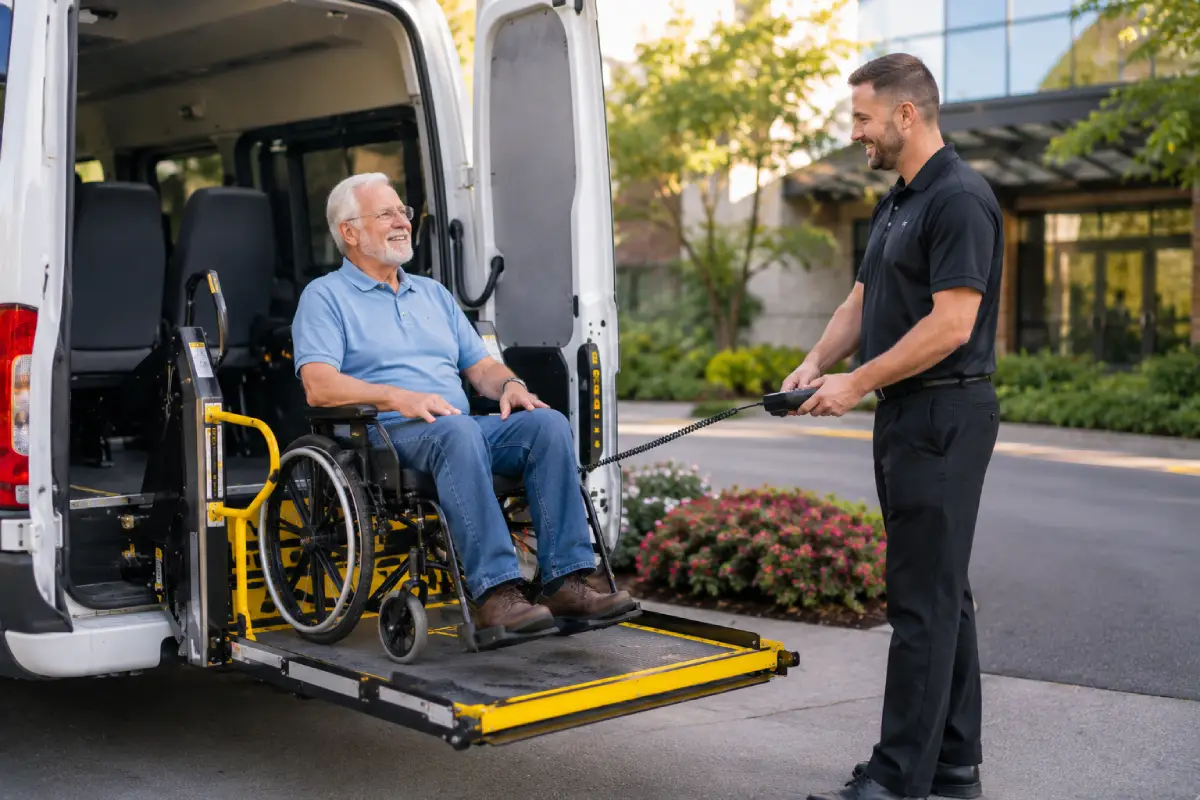
Some patients use a wheelchair temporarily after surgery, while others already use one as part of their daily mobility. In either situation, transportation needs can be different from those of a passenger who can easily enter a standard vehicle.
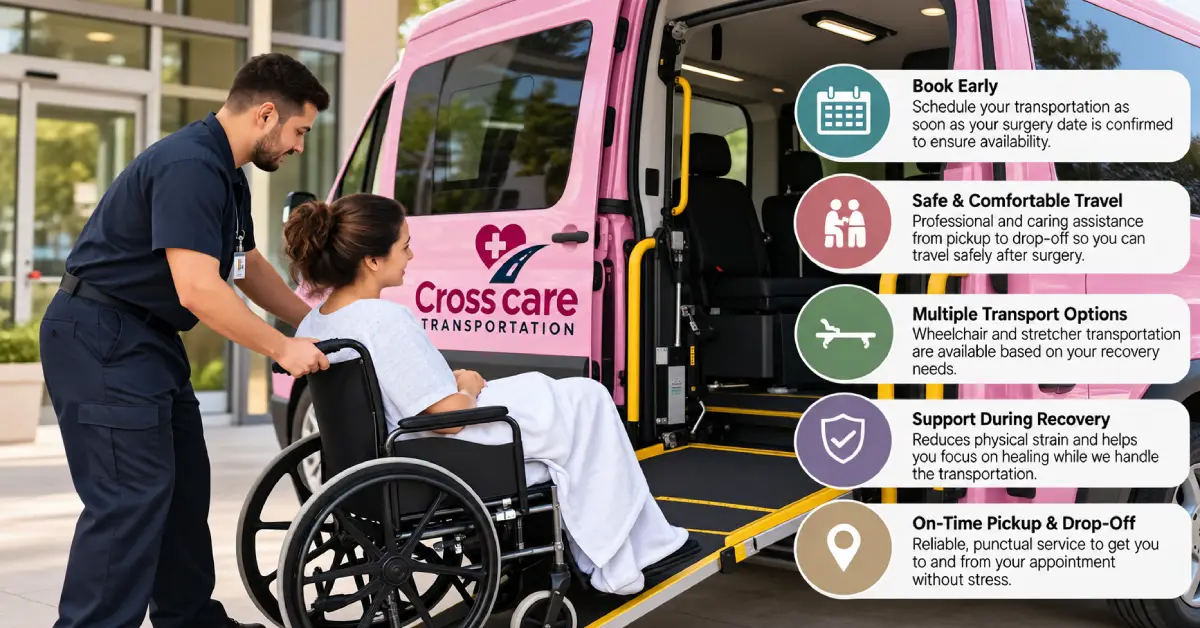
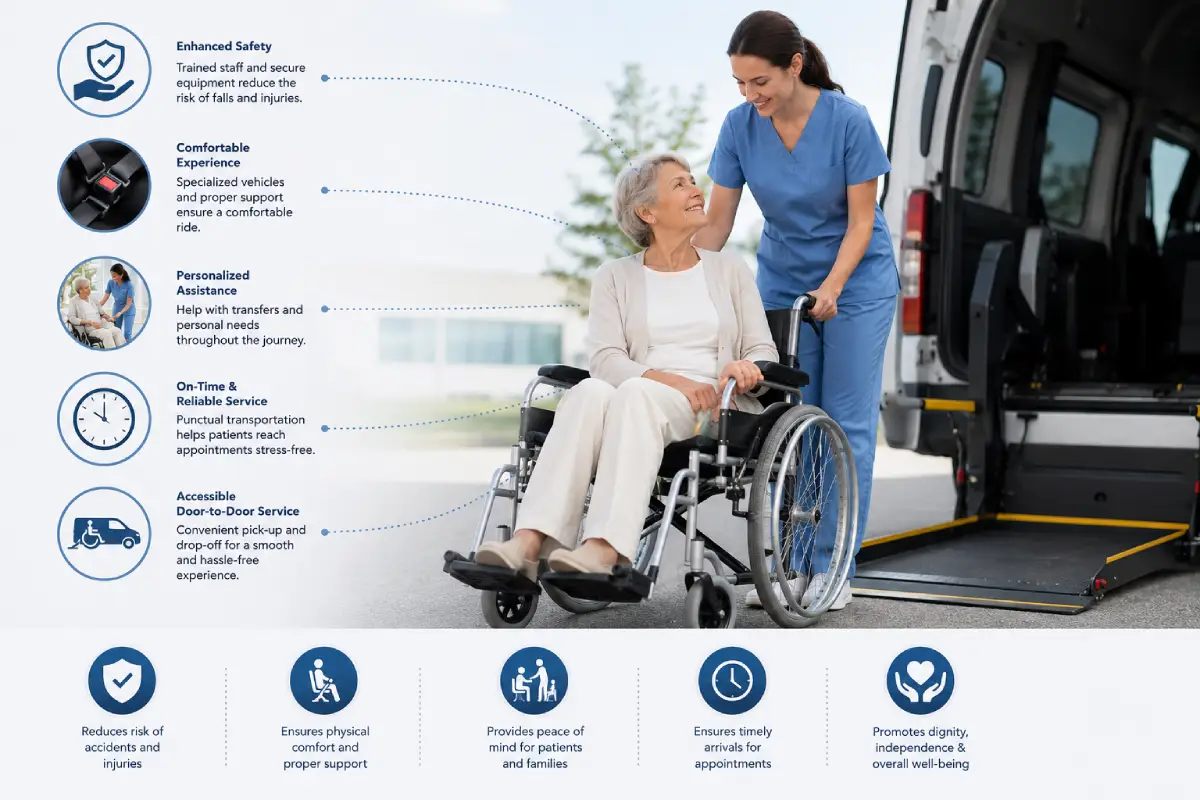
Wheelchair transportation after surgery can be particularly relevant when a patient needs a vehicle and transportation arrangement that can accommodate their mobility requirements. Patients should communicate their equipment type and assistance needs when making the reservation so the provider can determine what accommodations are available.
4. Less Pressure on Family Scheduling
Family members and friends are often happy to help after surgery, but availability can be complicated by work, childcare, distance, and other responsibilities.
Professional transportation can provide another option when coordinating schedules is difficult. Family members may still participate in other aspects of recovery without necessarily being responsible for every trip to and from a medical facility.
5. Easier Transportation to Follow-Up Visits
Transportation needs do not always end with the first ride home. Follow-up appointments may be scheduled while driving restrictions, mobility challenges, or discomfort are still present.
Arranging transportation for these visits can help patients get to the appropriate office without having to reconsider transportation each time. This may be especially useful during the early recovery period when mobility has not yet returned to its usual level.
6. A More Direct Transition Home
After spending hours at a surgical center or hospital, many patients are ready to settle into the recovery environment prepared for them at home. Extra stops, transportation changes, and long waits can make the process more tiring.
A door-to-door service creates a clearer transition between discharge and arrival home. The route and destination can be discussed in advance, allowing the patient to focus on getting settled and following the instructions provided by the medical team.
7. Transportation That Reflects the Patient’s Current Needs
A person’s transportation needs after surgery may look very different from their usual routine. Temporary mobility limitations, surgical dressings, assistive equipment, or difficulty with certain movements can all affect what type of ride is appropriate.
Post-surgery transportation gives patients an opportunity to communicate those needs before the trip rather than trying to adapt an ordinary transportation option at the last minute.
When Wheelchair Transportation May Be Appropriate
A wheelchair may be needed after orthopedic procedures, certain injuries, or surgeries that temporarily limit weight-bearing and movement. Other patients may already use wheelchairs and need accessible transportation for surgical and follow-up appointments.
The important consideration is not simply having space for a wheelchair. Patients should ask how the transportation provider handles their specific mobility equipment, what assistance is available, and what information needs to be provided before pickup.
A conversation before the scheduled trip can clarify what the service can accommodate and help avoid transportation complications on the day of discharge.
Planning Post Surgery Transportation in Nyack, New York
Patients arranging post-surgery transportation in Nyack, New York should start by reviewing the discharge requirements provided by their surgical center, hospital, or physician. Some facilities have specific rules about who may pick up a patient following sedation or anesthesia.
It is also useful to confirm the pickup address, expected discharge window, home destination, mobility equipment, stairs or access considerations at the destination, and any follow-up transportation that may be needed.
Discharge times can sometimes change depending on the procedure and recovery period. Providing the transportation company with accurate facility information can help both sides understand how pickup will be coordinated.
Cross Care Transport and Post-Surgery Support in Nyack New York
Cross Care Transport provides post-surgery transportation for patients who need help getting home from a surgical center, attending follow-up appointments, or managing transportation while dealing with mobility challenges.
Our team places attention on comfort, safety, dignity, and professional support throughout the trip. This approach can be useful when a passenger feels physically vulnerable after a procedure and would prefer transportation planned around the circumstances of recovery rather than a routine ride.
Cross Care Transport can also support patients during the period between surgery and a return to their normal transportation routine. The appropriate arrangement depends on the individual’s mobility, discharge requirements, destination, and level of assistance needed.
Frequently Asked Questions
How far in advance should post-surgery transportation be arranged?
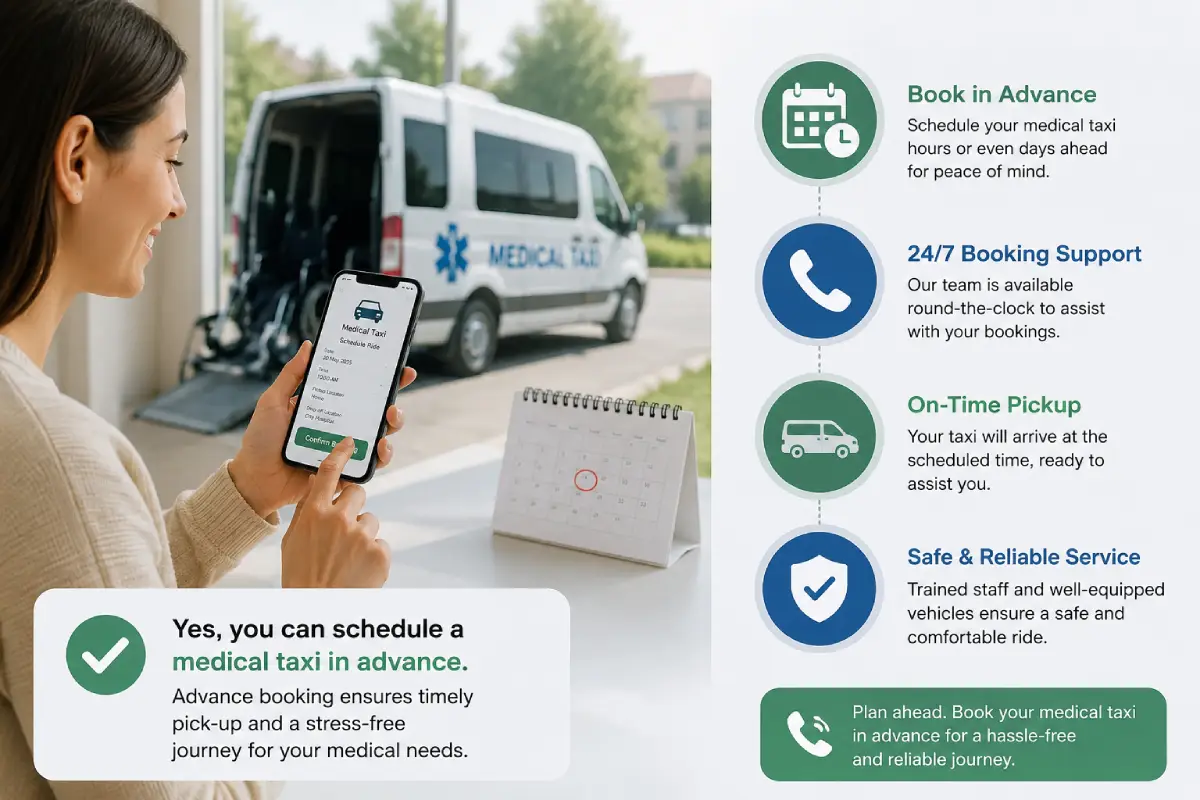
Booking before the procedure date provides time to discuss pickup details, mobility requirements, facility policies, and the type of transportation needed.
Can post-surgery transportation accommodate a wheelchair?
Wheelchair accommodations vary by provider and vehicle, so patients should explain their wheelchair type and mobility needs when arranging the trip.
Can transportation be arranged for follow-up appointments?
Post-surgery transportation can also be used for follow-up visits when a patient is still unable to drive or needs mobility assistance.